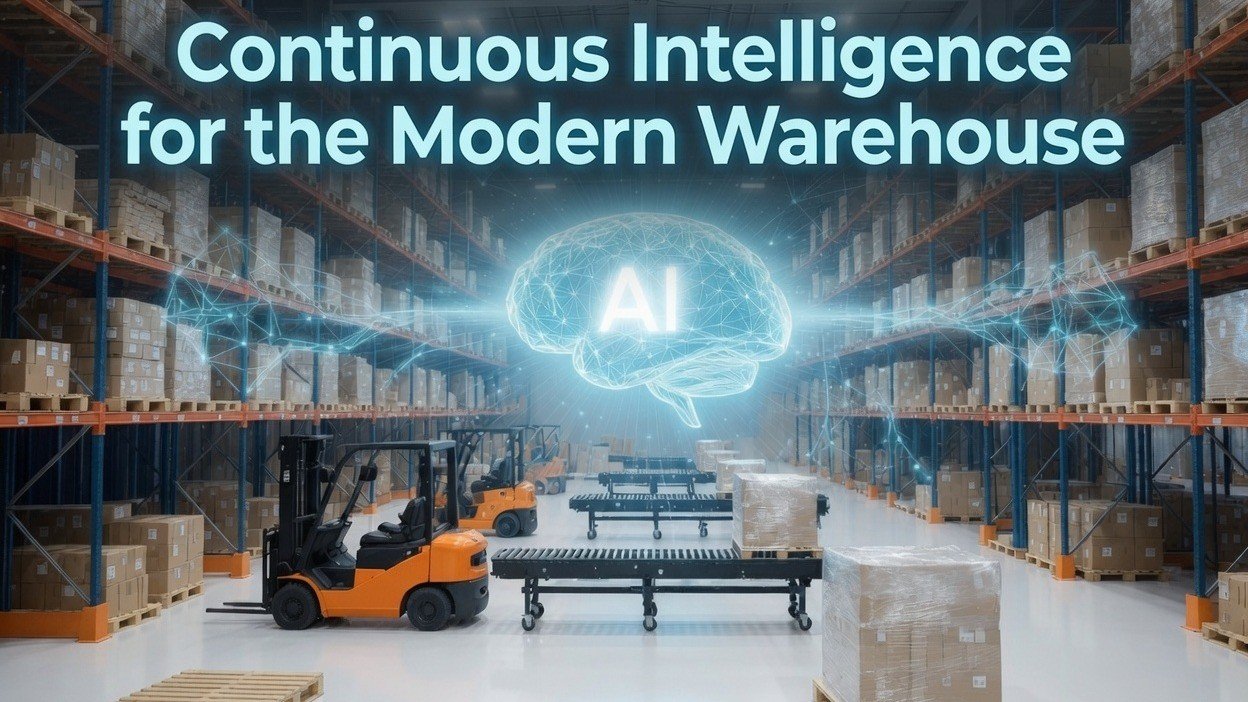
Modern warehouses generate thousands of operationally rich events every hour—wave starts, carrier delays, labor variances, inventory anomalies, and equipment signals. Yet most AI systems still treat intelligence as a one-time event: train a model, deploy it, and refresh it quarterly.
The result is predictable. Within months, performance drifts. OTIF metrics soften. Recommendations lose accuracy. By the time a new model is trained, validated, and deployed (often a six-week process), the warehouse has already evolved again. Meanwhile, the vast majority of real-time operational data is discarded because the system was never designed to learn continuously from it.
Supply chains are critical infrastructure. When warehouse intelligence goes stale, the impact reaches beyond the four walls—into food availability, medicine delivery, and the reliability of everyday goods. The industry needs AI that stays current by design, not by periodic retraining.
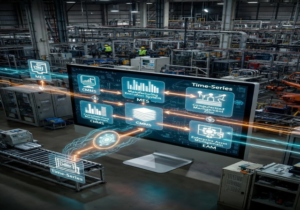
Intelligent Shopfloor was built for exactly this reality. Its Deterministic Industrial AI continuously reasons over live operational data, explains why performance is changing, and prescribes the precise next action—without requiring a full model rebuild every time the warehouse shifts.
From Static Models to Continuous Causal Reasoning
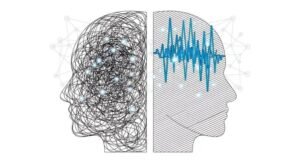
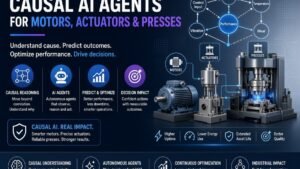
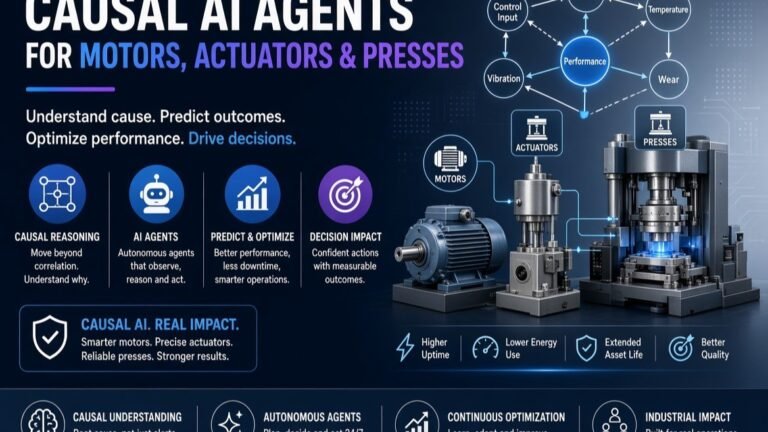
Traditional warehouse AI relies on correlative models that degrade as conditions change. Intelligent Shopfloor replaces that approach with causal, physics-informed intelligence that adapts in near real time.
Key capabilities include:
- Continuous analysis of WMS, labor, inventory, and equipment data streams
- Detection of hidden cause-and-effect relationships across systems
- Identification of leading indicators before OTIF or productivity declines
- Prescriptive, explainable recommendations that operators can trust and act on immediately
Because the system reasons causally rather than purely statistically, it does not require lengthy offline retraining cycles to remain relevant. Intelligence stays current as the warehouse evolves.
Mapping ISF’s Three-Tier Architecture to Core Warehouse Processes
Intelligent Shopfloor’s architecture is designed to deliver continuous decision intelligence at every layer of warehouse operations. Here is how the three tiers map to the most critical WMS processes.
Foundation Tier – Shopfloor Orchestrator
Zero-copy data federation and edge governance.
- Wave Planning: Continuously ingests order priority, inventory availability, labor capacity, and carrier schedules without creating new data silos.
- Put-Away: Federates real-time location, slotting rules, and equipment status so decisions reflect current conditions rather than yesterday’s snapshot.
- Picking: Streams live task queues, picker locations, and congestion signals to keep assignments aligned with actual floor state.
- Shipping: Connects dock status, carrier appointments, and packing progress so exceptions surface immediately.
Mid-Tier – Causal Insight Agent & Causal Simulator
Asset- and process-level diagnostics plus physics-informed “what-if” simulation.
- Wave Planning: Runs counterfactual simulations of alternative wave sequences, labor allocations, or priority rules before releasing work to the floor—preventing downstream congestion.
- Put-Away: Identifies causal drivers of slotting inefficiencies or travel-time spikes and tests alternative strategies without disrupting live operations.
- Picking: Diagnoses root causes of missed picks or path inefficiencies and simulates the impact of re-sequencing or zone changes.
- Shipping: Isolates the true causes of dock delays or late departures and evaluates interventions (labor reallocation, load resequencing) before execution.
Enterprise Tier – Plant Insight Agent
System-wide coordination and knowledge retention.
- Wave Planning: Coordinates multi-wave, multi-zone decisions and captures best-practice knowledge so every planner benefits from the strongest historical patterns.
- Put-Away: Maintains enterprise-wide visibility of storage utilization and propagates successful slotting logic across shifts and sites.
- Picking: Scales high-performing picker strategies and labor-balancing rules across the entire operation.
- Shipping: Orchestrates end-to-end visibility from order release to carrier departure, ensuring consistency across docks and shifts while retaining institutional knowledge.
Together, the three tiers create a closed-loop system: live data flows in, causal understanding is maintained continuously, safe simulations test interventions, and explainable actions are delivered to the floor—without waiting for the next quarterly model refresh.
Business Outcomes
Organizations applying Deterministic Industrial AI in warehouse environments typically see:
- More stable OTIF performance even as order profiles and labor availability change
- Faster resolution of operational exceptions (often 40–60 % reduction in diagnostic time)
- Reduced wasted labor and travel through continuously optimized put-away and picking paths
- Higher resilience against carrier delays and inventory anomalies
- Full audit-ready explanations for every recommended action—critical for regulated or high-stakes supply chains
The shift is fundamental: from AI that must be periodically rebuilt to intelligence that stays current by design.
Warehouse operations will continue to accelerate. The systems that support them must keep pace. Intelligent Shopfloor provides the continuous, causal, and deterministic foundation required to turn real-time operational data into reliable decisions—shift after shift.
Ready to see how Deterministic AI maps to your specific WMS environment? Contact us to schedule a process-specific demonstration focused on wave planning, put-away, picking, or shipping.
Visit https:///intelligentshopfloor.com
#WarehouseManagement #SupplyChain #DeterministicAI #OperationalIntelligence #IndustrialAI #WMS #SmartManufacturing
Originally posted on LinkedIn: https://www.linkedin.com/posts/sanjaymazumder_continuous-intelligence-for-the-modern-warehouse-activity-7489315277537681409-4vfz