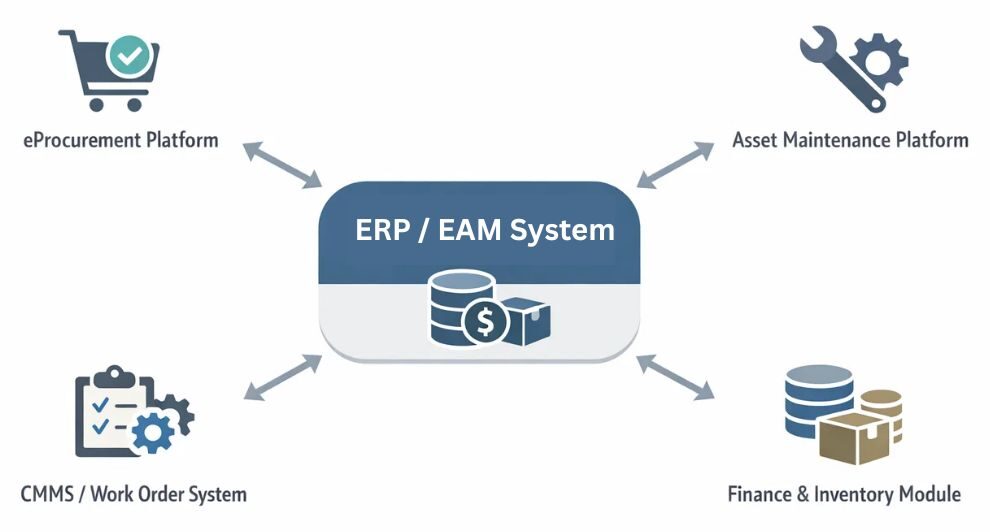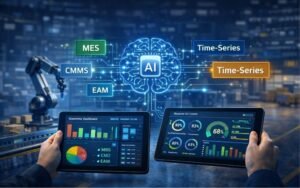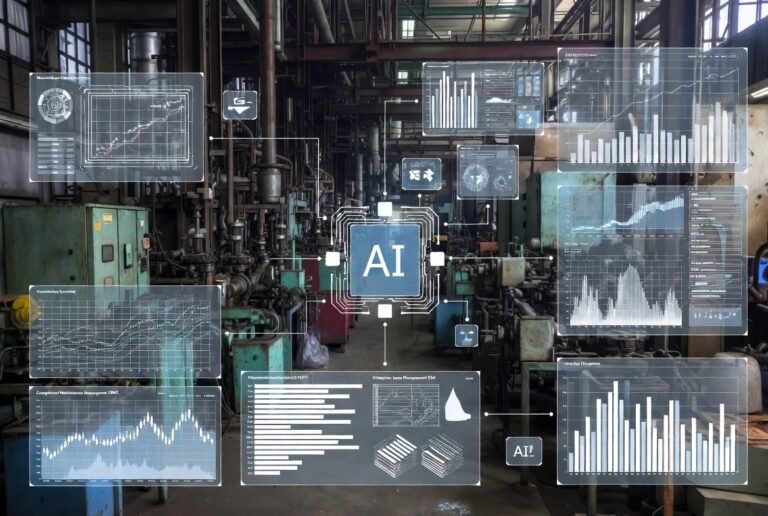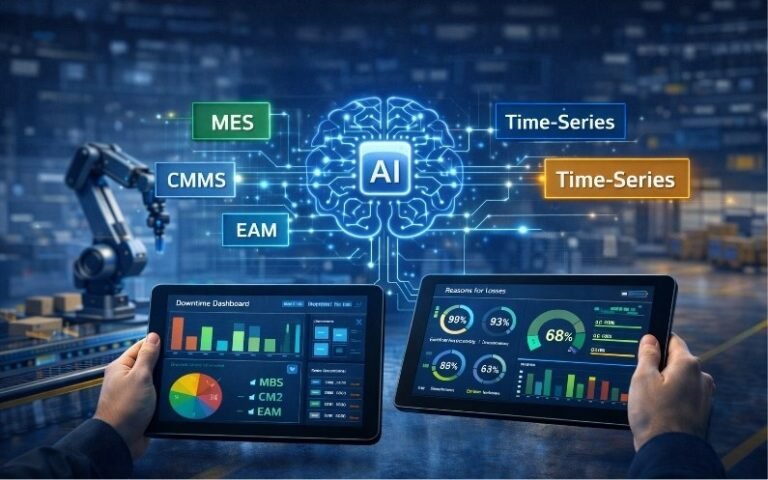
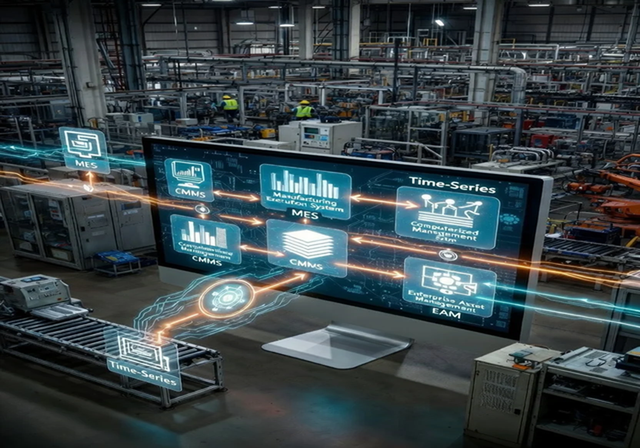
Modern AI technologies enable the extraction of far more value from existing manufacturing data—without replacing current systems. By ingesting data from MES, CMMS, EAM, and time-series sources, AI platforms can connect events, conditions, and outcomes across the entire operation. This isn’t about ripping and replacing; it’s about layering intelligence on top of proven systems like Siemens SIMATIC IT for MES or IBM Maximo for EAM, using APIs and edge gateways to stream data seamlessly.
AI enables:
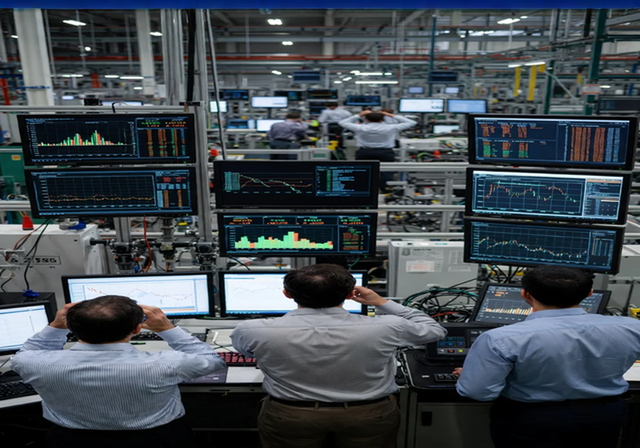
- Continuous analysis of machine, process, and maintenance data: Unlike batch-processed reports, AI leverages streaming analytics frameworks like Apache Flink or Kafka Streams to process high-velocity data from historians (e.g., AVEVA PI System). This enables real-time monitoring of metrics such as vibration spectra via FFT in Python’s SciPy, allowing immediate detection of deviations.
- Detection of hidden relationships across systems: Using graph neural networks (GNNs) in libraries like PyTorch Geometric, AI uncovers correlations—say, linking a CMMS work order spike to MES production dips and EAM asset health scores. This relational mapping, often via Neo4j graphs, reveals patterns invisible in isolated views, such as how ambient temperature from time-series data influences machine wear per ISO 10816 standards.
- Identification of leading indicators before issues escalate: Predictive models like LSTM (Long Short-Term Memory) networks in TensorFlow forecast failures by analyzing time-series trends. For instance, anomaly detection with Isolation Forests identifies subtle shifts in OEE, alerting teams via MQTT before downtime occurs, potentially reducing MTBF (Mean Time Between Failures) by 25%.
- Decision support that goes beyond static reports: AI delivers prescriptive analytics, using reinforcement learning (e.g., via Stable Baselines3) to simulate scenarios. What if we adjust maintenance schedules based on real-time data? Tools integrate with BI platforms like Tableau, but augment them with NLP to parse unstructured CMMS notes, turning them into actionable recommendations compliant with ISA-88 for batch processes.
Importantly, this approach builds on data manufacturers already trust and rely on. No need for massive data migrations; AI platforms use federated learning to train models across silos while maintaining data sovereignty under GDPR or NIST 800-171 standards. In a business context, this translates to ROI: Deloitte reports AI-driven predictive maintenance can cut costs by 10-40%, with faster payback on IIoT investments.
At a food processing plant we worked with, we applied AI to existing MES (Rockwell FactoryTalk) and time-series data to identify yield-loss patterns linked to equipment calibration drift, boosting throughput by 12% without new hardware. In aerospace, correlating EAM logs with sensor data using ensemble methods (XGBoost) prevented costly recalls.