I am an electrical engineer and a data scientist, building AI products that turn data into insight. In early 2025, that work led me to dental patient records, trying to predict how teeth and gums would fail over time. It was a data problem, not a clinical one. Each measurement, from X-rays and treatment histories to gum pocket depths and checkup notes, was part of a chain: a small change today could mean a tooth falls out tomorrow, even when everything looked fine.
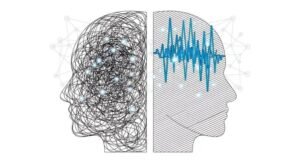
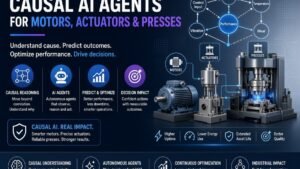
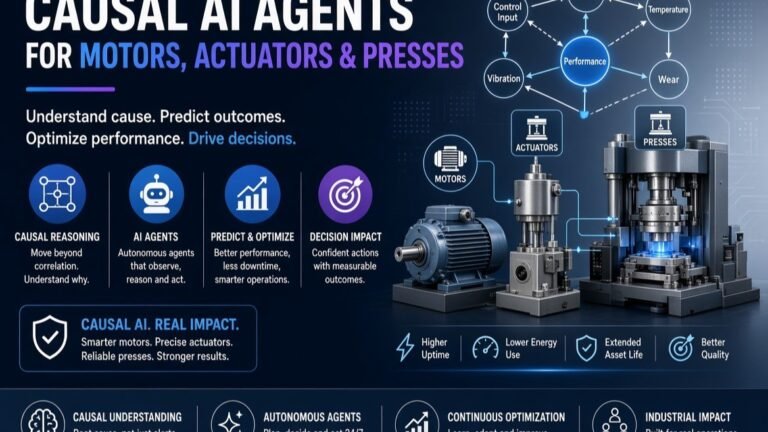
My toolkit of machine learning models failed me with this data. They confidently labeled patients as “stable,” even while deterioration was already underway. They could not see why things were happening. That insight led me to causal AI. Where correlational models find patterns in historical data, causal AI traces the mechanisms connecting one event to the next, exposing latent risks before they surface.
At the same time, I was talking with my longtime friend and business partner Ashis about smart manufacturing. We immediately saw the potential. Just as latent inflammation drives hidden dental decay, latent conditions in factory equipment drive hidden risks on the shop floor. Together, we began sketching parallels. A patient’s latent inflammatory state became Latent Asset Health in a stamping press. A subtle calibration drift today could trigger a catastrophic assembly jam tomorrow. The physics are different; the causal structure is identical.
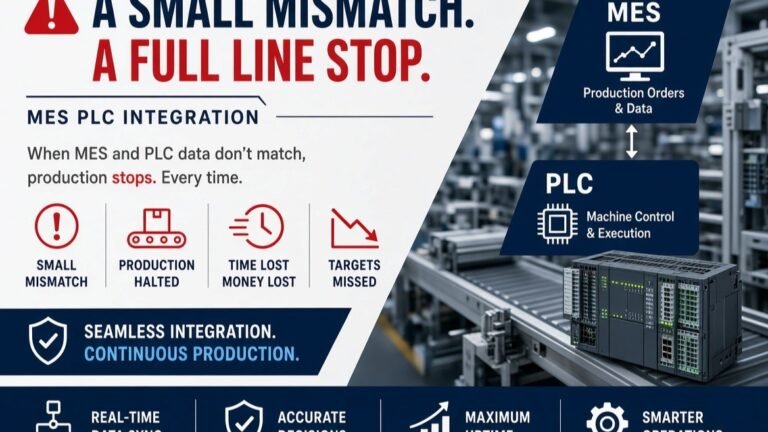
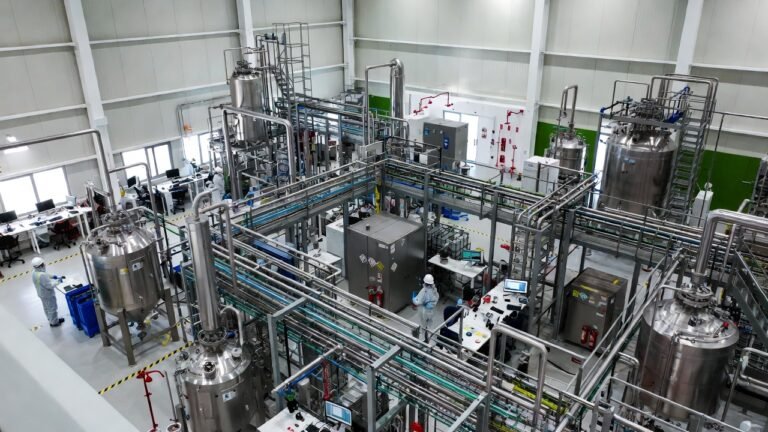
That conversation led to the founding of Intelligent Shopfloor. Ashis, as CEO, helped secure access to partner factories willing to share operational data: vibration logs, sensor readings, machine histories, and operator notes. We went straight to causal AI and began building models that would deliver the same predictive success we saw in periodontal disease to the shop floor. Rather than waiting for failures or relying on correlations that could break the moment operators intervened, we traced every link in the chain, following subtle shifts and hidden signals, using these sophisticated models to hunt for the exact conditions that could tip a machine from safe to catastrophic.
The Prediction Trap
In manufacturing, I encountered the same failure mode I had seen in dental AI. I call it the Prediction Trap. A predictive maintenance model can achieve 99 percent accuracy on historical vibration data. It looks excellent on paper. But the moment an operator acts on the prediction — slows a motor, adjusts a tensioner — the correlations the model relied upon no longer hold. The system goes blind. It tells you a machine is safe when it is, in fact, still failing. The model never understood why the vibration occurred. It only knew that, in the past, X was followed by Y.
Latent Failures
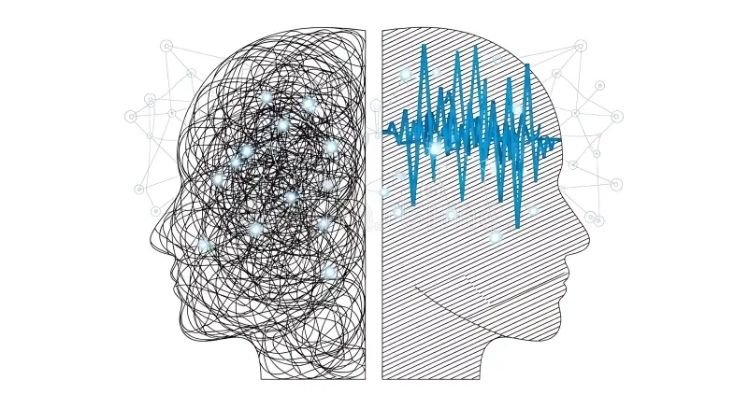
Some of the most dangerous problems are invisible on dashboards. Operator tweaks and sensor noise mask real degradation. A current imbalance in a reactor can be a structural emergency, even while temperature and throughput appear normal. Standard AI, looking only at surface metrics, may assign that machine a 90 percent health score. Causal AI recognizes that the machine is already failing from the inside out because it identifies the conditions that truly dictate future outcomes, independent of what everything else is saying.
Real-World Impact
At an automobile glass plant, one probe sent false-empty signals, triggering infinite retry cycles across 14 hoppers. The team had chased downstream symptoms for months. No predictive tool could isolate the root cause. Our system traced the causal chain to that single probe and provided fifteen minutes of lead time before failures cascaded. The team said it was the first time they had ever had that capability.
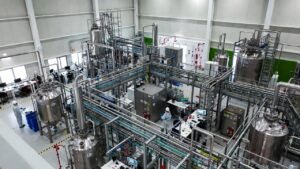
In a specialty chemicals facility, counterfactual simulation optimized Lockout/Tagout procedures for isocyanates. The system is tethered to the actual physics of the machine and cannot recommend impossible interventions. The result was a 20 percent reduction in human error while maintaining full throughput.
Why It Works
Every recommendation is physically verifiable. A vibration cannot cause a voltage drop without a mechanical-to-electrical pathway. Two identical machines may have radically different risk profiles. One has a latent misalignment; the other has a worn bearing. Causal history matters more than the current state.
The system answers three questions simultaneously: why did this happen, what might happen next, and what will happen if we intervene this way. It runs at the edge, with zero latency and no cloud dependency.
Looking Forward
Latent Inflammatory State became Latent Asset Health. Dynamic Treatment Regimes became Dynamic Control Regimes. The chronological monitoring I built for dental patients became the blueprint for real-time root-cause analysis on the shopfloor.
The work is not just about predicting failures. It is about seeing hidden logic, acting before consequences unfold, and giving teams confidence when the stakes are highest — whether to prevent financial loss or protect human lives.
The Intelligent Shopfloor is operational today, and we are only beginning to discover how far tracing cause and effect can take us. If you are ready to move beyond the Prediction Trap, find our work at intelligentshopfloor.com.
Sanjay Mazumder
CTO, Intelligent Shopfloor