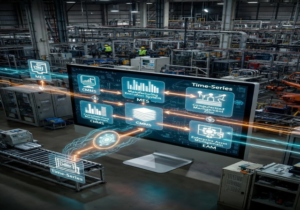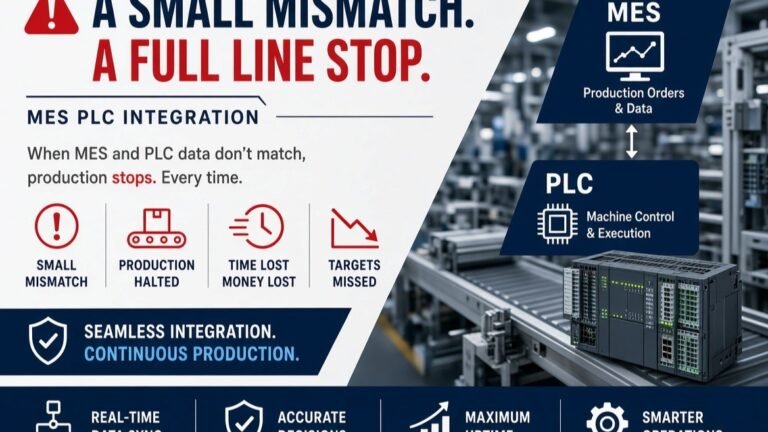
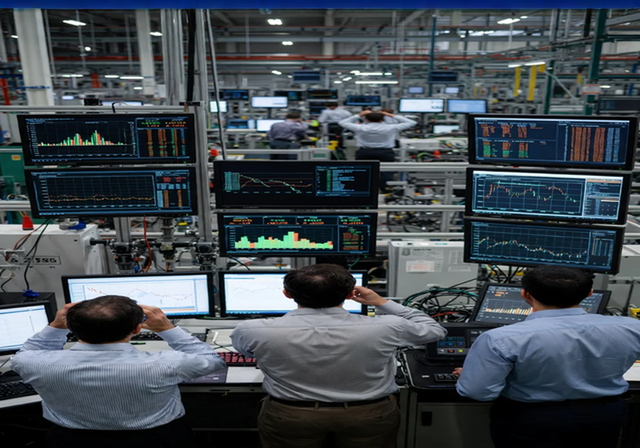
Most manufacturing environments operate with siloed systems. MES tracks production execution and enforces workflows compliant with standards such as ISA-95 for hierarchical control. CMMS and EAM manage assets and maintenance, often using protocols such as MTConnect for machine-tool data interchange or ISO 55000 for asset management optimization. Historians and time-series platforms capture machine behavior at high frequencies—think 1ms sampling rates for vibration analysis via FFT (Fast Fourier Transform) algorithms in tools like AspenTech’s IP.21.
Although each system is valuable in its own right, they often lack a shared context. Data models differ: MES might use relational databases (e.g., SQL Server) with structured schemas for batch tracking, while time-series platforms rely on NoSQL or columnar stores (e.g., InfluxDB) optimized for temporal queries. Integration hurdles arise from incompatible APIs—RESTful in modern EAM but legacy OPC-UA (Open Platform Communications Unified Architecture) in older historians—leading to ETL (Extract, Transform, Load) processes that are brittle and latency-prone.
As a result:
- Insights are retrospective rather than actionable: Traditional BI tools like Tableau or Power BI generate static dashboards from aggregated data, but they fail to incorporate real-time streaming via Apache Kafka or MQTT protocols, missing opportunities for predictive alerts on anomalies detected by ARIMA (AutoRegressive Integrated Moving Average) models.
- Root causes remain unclear due to fragmented views: Without a unified ontology—such as those defined in Semantic Web standards like RDF (Resource Description Framework)—correlating a downtime event in CMMS with sensor spikes in time-series data requires manual cross-referencing, obscuring causal links that could be revealed through graph databases like Neo4j for relationship mapping.
- Decisions are delayed while teams reconcile conflicting data: Data silos often lead to version conflicts; for instance, EAM might log asset health via CMMS work orders, but MES production logs could show conflicting timestamps due to unsynchronized NTP (Network Time Protocol) across systems, extending MTTR (Mean Time To Repair) by hours or days.
- Valuable tribal knowledge stays locked in individuals’ experience: Expert rules for troubleshooting—e.g., heuristic thresholds for machine wear based on vibration RMS (Root Mean Square) values—are rarely codified into rule engines like Drools or integrated with ML models, perpetuating reliance on key personnel and risking knowledge loss.
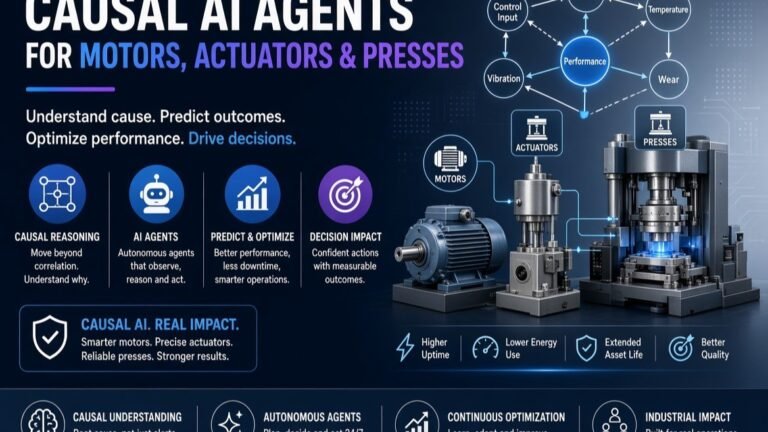
Traditional analytics and dashboards describe what happened, but they rarely explain why it happened or what should be done next. For example, a spike in OEE (Overall Equipment Effectiveness) dips might be visualized, but without causal inference techniques such as Bayesian networks or counterfactual analysis in libraries like PyWhy, operators can’t simulate “what-if” scenarios to prescribe fixes.