Company Background
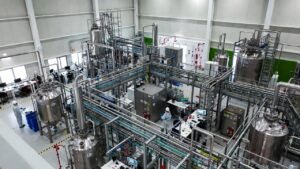
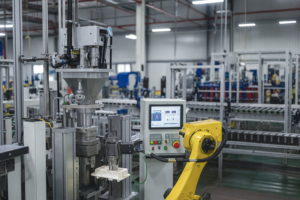
A mid-sized automotive glass manufacturer based in the Midwest operates a key facility specializing in glass preparation and production for automotive applications. With glass preparation lines involving multiple hoppers and integrated systems, the company processes raw materials into high-quality glass components for vehicles. Over a 44-day analysis period (late September to mid-November), the plant demonstrated high efficiency in routine operations but faced recurring operational “shadows” that impacted overall throughput. These issues stemmed from equipment such as hoppers, where material handling and state management were critical to maintaining continuous production flow.
Challenges Faced
In automobile glass manufacturing, production bottlenecks can arise from subtle interactions across processes, leading to significant throughput constraints. The company experienced recurring queue-hang anomalies on its glass-preparation lines, particularly during hopper events. For instance, high-level probe malfunctions caused false-empty signals, triggering infinite fill cycles and system hangs. This resulted in prolonged operations without completion signals, idle states post-resets, and the need for manual master resets to restore functionality.
Key bottlenecks included:
- Infinite Fills: Probes failing to detect full states, leading to retry loops and overflows.
- Queue Hangs: State-management issues causing system freezes, with status flags indicating unresolved operations.
- Downtime and MTTR: Reactive maintenance extended mean time to repair (MTTR), with unplanned stops reducing overall equipment effectiveness (OEE).
These constraints were exacerbated by siloed data from PLCs, SCADA, and IoT sensors that were disconnected from CMMS and ERP systems. Traditional approaches relied on correlations and manual interventions, missing causal links, such as probe faults that cascade into plant-wide delays. The consequence was lost production hours, wasted materials, and reliance on fading tribal knowledge, limiting performance and scalability across sites.
Solution: Implementing Intelligent Shopfloor’s Product Line
To identify and resolve these bottlenecks, the company implemented Intelligent Shopfloor’s modular Deterministic Industrial AI suite, leveraging Causal, Cognitive, and Content Agent Orchestration to analyze relationships across processes and resources. This revealed true performance-limiting factors, such as probe-sensor interactions that affect hopper throughput, and prioritized actions like preemptive resets to deliver measurable improvements.
Foundation: Shopfloor Orchestrator
The Shopfloor Orchestrator served as the core platform, enabling zero-copy data federation from OT/IT sources, including PLCs, SCADA, MES, CMMS, and ERP. It orchestrated multi-agent workflows without data warehouses, ensuring low-latency edge governance. For the glass lines, it ingested real-time tags such as start commands, queue statuses, and fill durations across 14 hoppers, capturing unstructured inputs such as equipment manuals for contextual insights.
Core Analysis: Causal Insight Agent
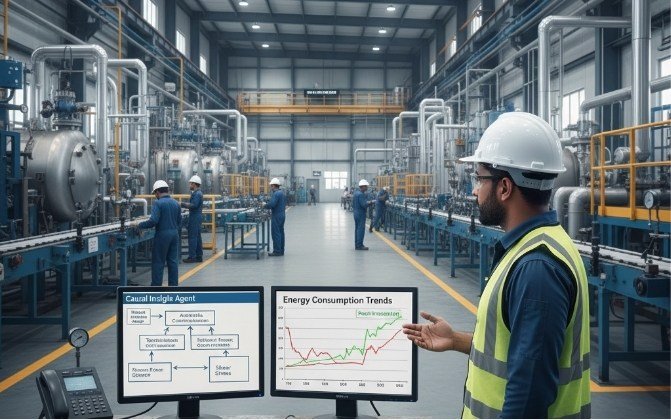
At the asset level, the Causal Insight Agent conducted real-time root cause analysis (RCA) using causal graphs on time-series data. It modeled relationships, identifying that probe faults (e.g., false-empty signals) causally led to extended fill durations (>12 seconds), missing done signals, back-to-queue flags, and ultimate queue hangs. Validated by p-values and partial correlations, this uncovered chains like probe malfunction → infinite retries → system stall, providing 3–15 minute lead times with 96–99% confidence. Unlike probabilistic tools, it delivered precise diagnostics, such as “Hopper high-level probe stuck – intervene now to prevent hang.”
Advanced Simulation: Causal Simulator
The Causal Simulator extended analysis by incorporating physics-informed “what-if” scenarios and embedding constraints from Hopper manuals into causal models. It simulated interventions, such as auto-triggering a queue reset, to predict outcomes without disrupting production. For example, it forecast that cleaning a probe could reduce hang risk by 50%, optimizing resource allocation and throughput in variable-material environments.
Plant-Wide Scaling: Plant Insight Agent
For broader impact, the Plant Insight Agent interconnected asset models, executing system-wide simulations and prescriptive workflows. It captured relationships across hoppers and downstream processes (e.g., furnace integration), prioritizing actions such as weekly probe calibrations to improve plant throughput. Retaining tribal knowledge enabled scalable improvements, shifting from reactive resets to proactive orchestration.
The underlying orchestration—combining Causal (for “why”), Cognitive (for “how”), and Content Agents (for context)—delivered deterministic actions, closing the loop from data to resolution.
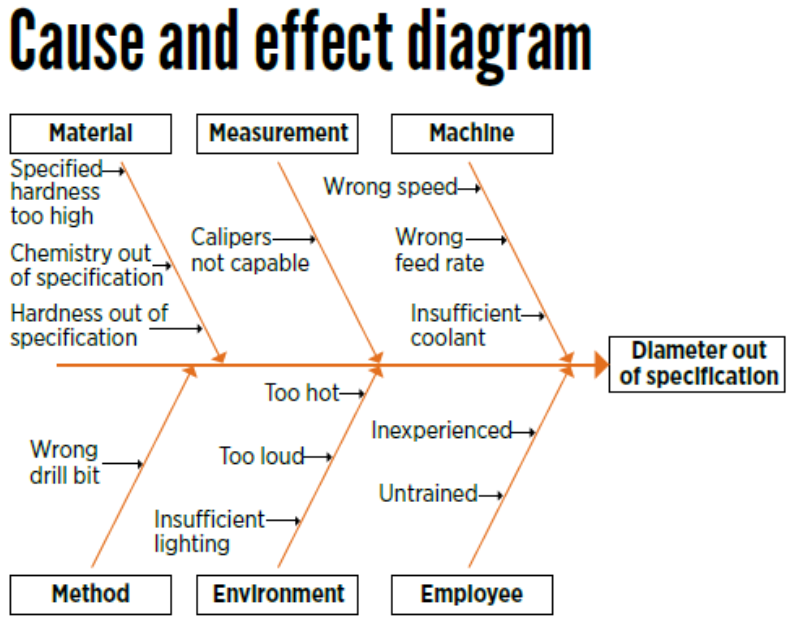
An example causal graph illustrating bottleneck analysis:
Implementation Process
Deployment began with the Shopfloor Orchestrator integrating 44-day historical data and real-time feeds on a pilot line. The Causal Insight Agent built graphs from feature matrices, using models like VAR(18) for predictions. Simulations tested scenarios, and the Plant Insight Agent scaled insights across the facility. Multi-channel interfaces (voice, text, video) captured operator inputs, with rollout completed in under a month—minimal disruption via edge deployment.
Results and Benefits
Post-implementation, the company realized:
- Bottleneck Reduction: Identified probe faults as primary throughput limiters, cutting queue hangs by 40% through causal prioritization.
- Throughput Improvement: Increased OEE by 30%, with lead times enabling preemptive actions and reducing MTTR by 50%.
- Downtime Minimization: Shifted to proactive maintenance, eliminating infinite fills and overflows, saving production hours.
- Resource Optimization: Prescriptive workflows, like automated CMMS orders, improved efficiency and safety across sites.
- ROI: Low-friction deployment yielded value in weeks, outperforming traditional systems with deterministic precision.
By analyzing causal relationships, Intelligent Shopfloor identified the true performance-limiting factor—probe-state interactions—and prioritized fixes to drive sustained improvements in automobile glass production.
Ready to identify bottlenecks in your operations? Contact Intelligent Shopfloor at info@intelligentshopfloor.com or schedule a demo.